A Pine Six-Bottle Caddy with a Bottle Opener
- Hands on
- 155 min
- Start to finish
- 4 hours
- Level
- easy
- Makes
- one caddy holding six 12oz bottles
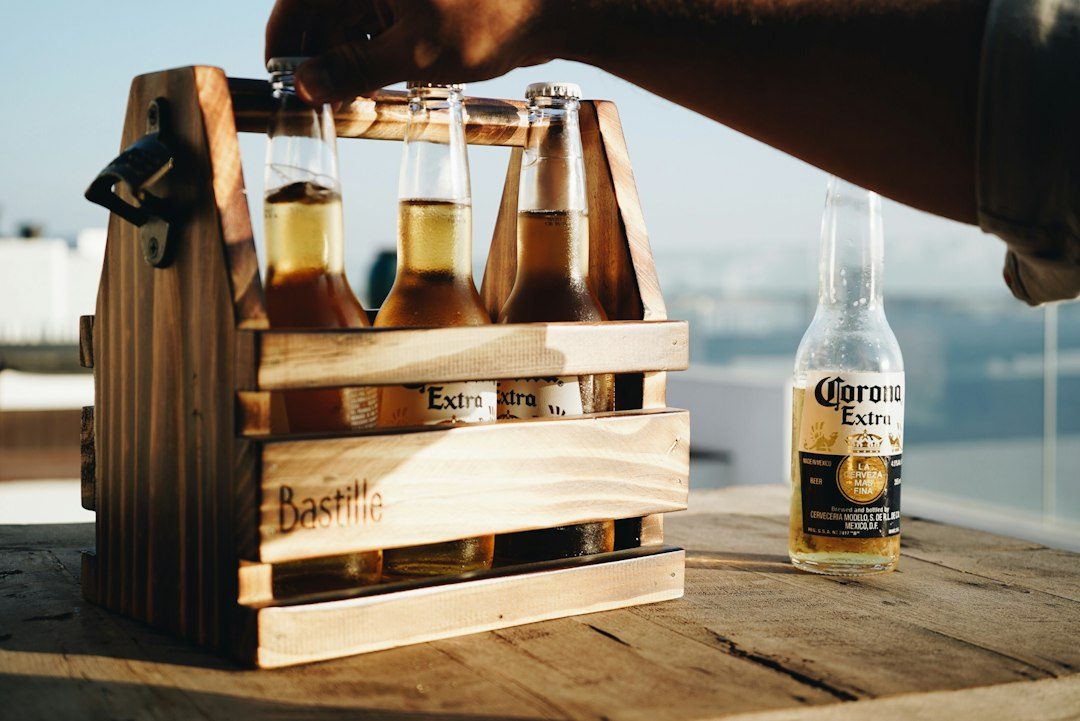
This is closer to a small box than a carrier: a base, four short walls in two heights, and a dowel handle bridging the two tall ends. A single divider splits the interior into two rows of three bottles, snug enough that nothing shifts when it's carried and loose enough that bottles go in and out without forcing. A screw-on bottle opener on one end panel gives it a second job once the bottles are gone.
What you need
Step by step
-
From the 1x10, cut the base 10-1/2in long and two end panels 10in tall, all square on the miter saw.
15 min -
From the 1x4, cut the two side rails and the center divider to the same 10-1/2in length.
10 min -
Mark the center of each end panel 1-1/2in down from the top edge, and bore a 3/8in hole straight through with a spade or Forstner bit, backing the panel with a clamped scrap block to stop exit-side splintering.
20 min -
Ease every sawn edge and sand all faces to 220 grit before assembly — far easier now than once the caddy is boxed up.
20 min -
Dry-fit the base, side rails and divider to check the assembly sits square, then glue and screw the side rails and divider to the base, countersinking each screw.
30 min -
Glue and screw the two end panels to the assembled base, keeping the bored holes aligned so the dowel will pass through both without binding.
20 min -
Cut the dowel to 11in, spread glue in the bored holes, and tap the dowel through both end panels until it sits flush on each side; clamp until the glue sets.
15 min -
Mount the bottle opener to the outside face of one end panel, positioned so a dropped cap clears the caddy rather than landing among the bottles.
10 min -
Finish with exterior oil or spar varnish, including the interior faces and the underside of the base, and let it cure fully before use.
15 min
Afterwards
Vacuum up the pine dust rather than blowing it around, and let the exterior oil cure fully — at least 24 hours, longer in a cool shop — before the caddy meets condensation or ice. Give the glued handle and the side-rail joints a firm tug before loading six full bottles; if anything flexes, drive in another screw rather than trusting the glue alone.
Questions
Will it hold cans as well as bottles?
Cans are narrower and shorter, so they'll sit loose. If cans are the main use, narrow the two rows by moving the divider off-center rather than resizing the whole caddy.
What finish actually holds up to condensation and ice?
An exterior oil or spar varnish, reapplied yearly. An indoor-only finish like shellac will cloud and lift the first time it sits in a melting ice bucket.
Can I use plywood instead of solid pine for the base?
Yes — 3/4in exterior-grade plywood works for the base since it's fully hidden once assembled, though the end panels show their edges and are better in solid stock.
Why a divider instead of six separate compartments?
Bottles in the same row brace against each other once loaded, so a single center divider is enough to stop the whole load shifting sideways. Individual pockets add joinery without adding real stability.