A Three-Tier Ladder Plant Stand
- Hands on
- 205 min
- Start to finish
- 35 hours
- Level
- moderate
- Makes
- one three-shelf plant stand, about 400mm wide, 820mm tall and roughly 300mm deep at the base
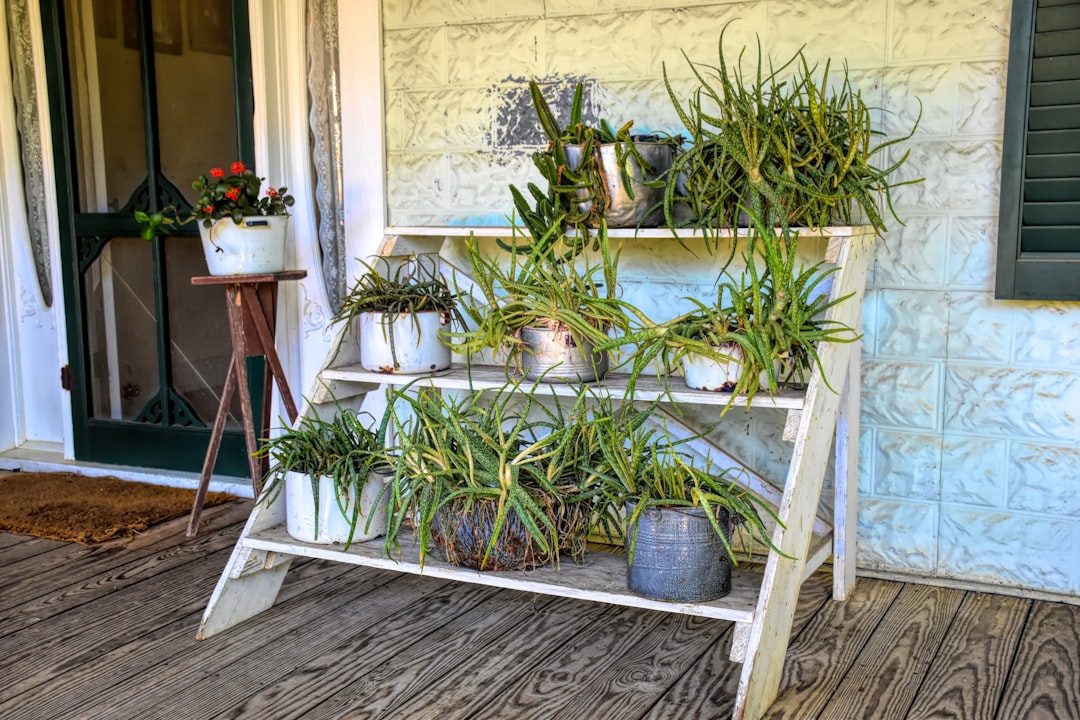
Two legs a side do the work: a front leg left square, and a back leg cut with a single bevel and set at a rake, so the frame widens toward the floor. Three shelves span the gap between the two frames, each one deeper than the one above it, which is what gives a ladder-style stand its stepped look without any complicated joinery. Every cut is a crosscut or a single bevel on the mitre saw. The one thing worth doing properly rather than by the numbers below is fitting the mid and lower shelf bearers to the frame once it is standing, since a degree or two of drift changes the gap more than you'd expect.
What you need
Step by step
-
Cut the two front legs to 800mm from the 45 x 20mm stock, square at both ends.
10 min -
Set the mitre saw to a 20-degree bevel and cut the two back legs to 850mm, with the bevel running the same way at both ends so each leg sits flat on the floor and flat under the top bearer.
15 min -
Mark both front legs at 220mm, 500mm and 800mm up from the foot, square across the face — these are the three bearer heights.
10 min -
Stand one front leg and one back leg on a flat surface, back leg raked out behind, and clamp them together loosely at the 800mm mark so the frame holds its shape. Repeat for the second pair.
15 min -
With each frame standing at its resting angle, measure the actual gap between the two legs at all three marked heights. Expect around 200mm at the top, 300mm in the middle and 400mm at the bottom, but cut to what you actually measure.
15 min -
Cut six bearers from the 20 x 20mm batten to the measured lengths, two of each depth.
15 min -
Glue and screw the top bearer between the two legs of each frame at the 800mm mark, pre-drilling before driving the 40mm screws so the softwood doesn't split. Check the frame stands square before the glue sets.
20 min -
Fit the middle and bottom bearers the same way, then set the frame aside and build the second, identical frame.
20 min -
Cut nine slats to 400mm from the 70 x 20mm stock — two for the top shelf, three for the middle, four for the bottom.
15 min -
Stand the two frames 400mm apart and screw the top shelf's two slats across the top bearers, spacing them with a finger-width gap for drainage. This ties the two frames together and squares up the whole stand.
20 min -
Fit the middle and bottom shelf slats the same way, checking the stand still sits flat and doesn't rock before moving on.
15 min -
Sand every edge and surface through 120 then 240 grit, easing the sharp arrises so the stand is comfortable to lift by the shelf edges.
15 min -
Apply the first coat of exterior varnish or teak oil, let it cure fully, then apply a second coat.
15 min
Afterwards
Vacuum the joints rather than blowing sawdust into the room, and let the final coat cure fully — at least 24 hours, longer in a cold or damp workshop — before loading any pots. Once it's outside, check the bearer screws each season, since the wider splay at the base means the bottom shelf carries the most leverage if a heavy pot rocks it. Recoat yearly if it lives outdoors, and keep the feet off standing water.
Questions
Can I leave it outside all year?
Yes if you keep the finish topped up, but standing the leg feet in a puddle will rot them faster than anything else — stand it on a slab or add self-adhesive pads, not bare on soil or grass.
How much weight will each shelf take?
Comfortably a few average potted plants — this is a display stand, not a workbench. Put your heaviest pots on the bottom shelf, where the wider stance gives the most support.
What if my mitre saw doesn't do bevel cuts?
A hand saw and a mitre box with a 20-degree guide block will cut the same angle; it just takes longer, and is worth clamping the leg for each pass.
Why measure the bearers instead of just cutting to the numbers given?
A degree or two of drift in how you clamp the frame changes the gap by several millimetres over that length. Measuring each frame once it's standing keeps the shelves sitting flat instead of slightly wedged.