A Softwood Nest Box for Small Garden Birds
- Hands on
- 170 min
- Start to finish
- 3.3 hours
- Level
- easy
- Makes
- one nest box, floor roughly 120 x 130mm
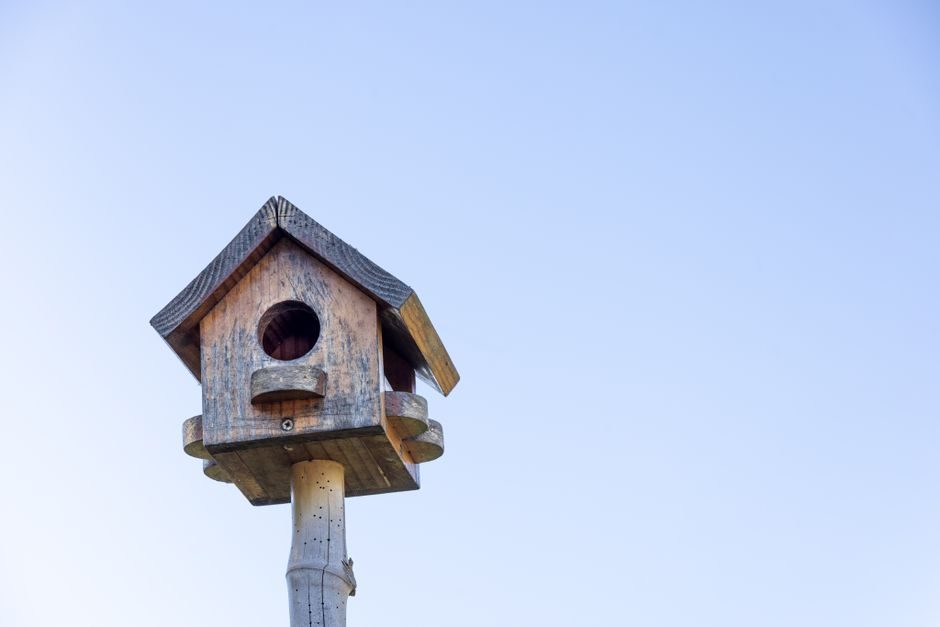
A nest box is a forgiving project to cut and join, but the difference between one that gets used and one that sits empty all season comes down to a handful of numbers: hole size, floor area, and how far the hole sits above the floor. This one comes from a single length of board, with a hinged roof for the yearly clean-out.
What you need
Step by step
-
Cut the back panel to 350 x 150mm and the front panel to 220 x 150mm from the board on the mitre saw, squaring both ends.
15 min -
Cut the two side panels to 220 x 150mm, then mark and cut a taper on each from 220mm at the front edge down to 170mm at the back edge, giving the roof its slope.
20 min -
Mark the entrance hole centre on the front panel 150mm up from the floor line, clamp the panel to a scrap backer board, and drill the 32mm hole at low speed, easing off regularly to clear the waste.
25 min -
Score a few shallow grooves on the inside face of the front panel below the hole so fledglings have something to grip on their way out.
10 min -
Cut the base to 120 x 130mm, nipping each corner off at 45 degrees to leave a drainage gap once it's fitted.
15 min -
Glue and screw the base between the two side panels, then glue and screw the front and back panels on, keeping the taller edge of the sides at the front and the shorter edge at the back, where the roof will hinge.
25 min -
Cut the roof to 220 x 170mm and drill a couple of small ventilation holes near the ridge line, angled slightly so driving rain doesn't get through them.
15 min -
Fit the hinge along the roof's back edge so it lifts clear for cleaning, then fit the hook and eye at the front to hold it shut.
15 min -
Ease every sharp edge with sandpaper, especially around the entrance hole, then apply a coat of exterior finish to the outside faces only if you want one, and drill two fixing holes through the back panel above and below the box body for mounting.
20 min -
Mount the box between 1.5 and 5m up a post, tree or wall, tilted very slightly forward so rain runs off the roof rather than into the hole.
10 min
Afterwards
Empty and brush out the old nest material once a year, between late autumn and January, after the breeding season and before birds start prospecting for the next one — wear gloves, since old nests can carry parasites, and check the drainage holes in the base haven't clogged. Leave any finish a full week to cure before hanging the box, since one that hasn't hardened can taint the box for its first occupants.
Questions
What size hole should I drill?
32mm suits house sparrows and great tits. Drop to 25mm if you'd rather favour blue tits, which struggle to compete with larger birds at a wider hole.
Where should it face?
Somewhere between north and east, out of strong afternoon sun and the wettest prevailing wind, and away from bird feeders, which draw predators toward a box.
Do I need to treat the wood?
Untreated softwood will last several seasons outdoors as it is. If you do finish it, use a water-based exterior product on the outside only and let it cure fully before hanging — never finish the inside.
Why no perch below the hole?
A perch makes it easier for predators to get a grip while raiding the box. Birds that use hole-fronted boxes don't need one to get in.